The ball valve is the most common on/off valve on a plant. It is simple, quick to operate and seals tightly. Here is what is inside one, and what to check before you order.
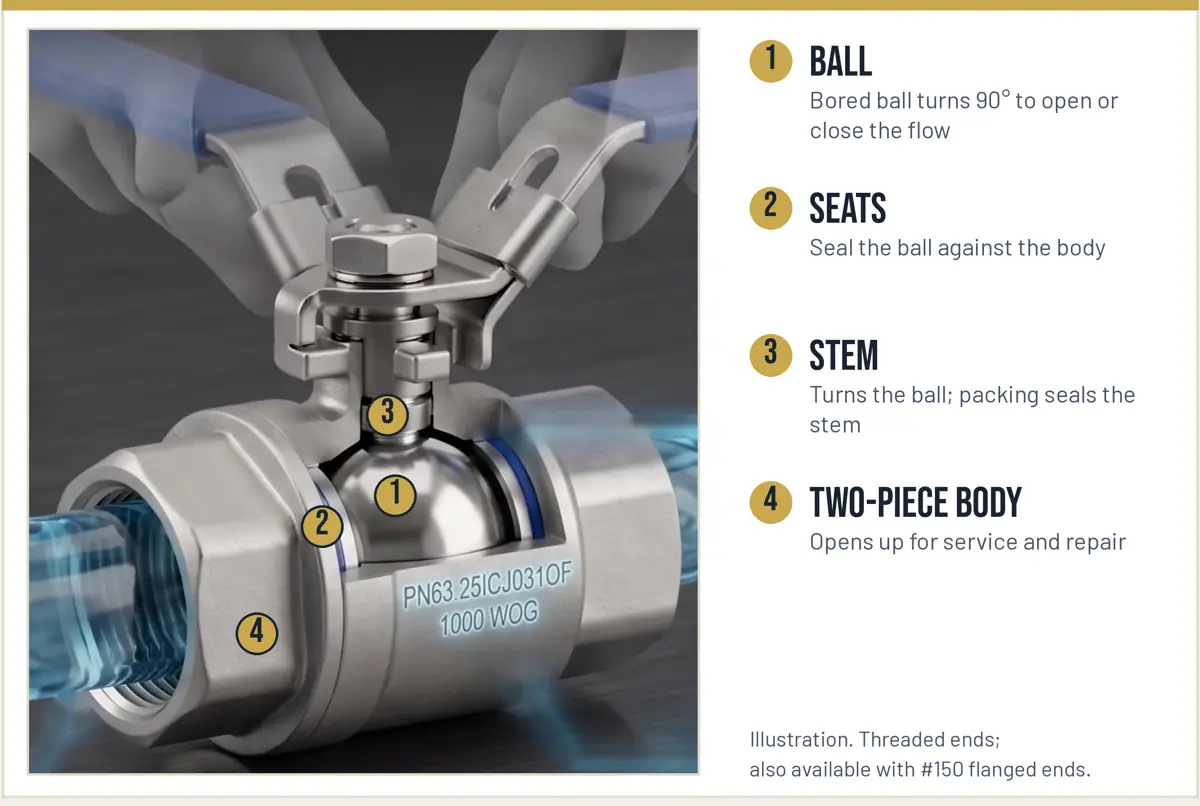
The parts
- Ball: a sphere with a hole (the bore) through it. With the lever in line with the pipe, the bore lines up and flow passes. A quarter turn across the pipe and the solid side of the ball blocks the flow.
- Seats: soft rings on each side of the ball. They press against it and seal when the valve is closed.
- Stem and packing: the stem connects the lever to the ball. Packing around the stem stops leakage along it, and a gland nut lets you tighten the packing if it starts to weep.
- Two-piece body: the body screws together and clamps the ball and seats in place.
- Threaded ends: screw directly onto threaded pipe.
Reading the markings
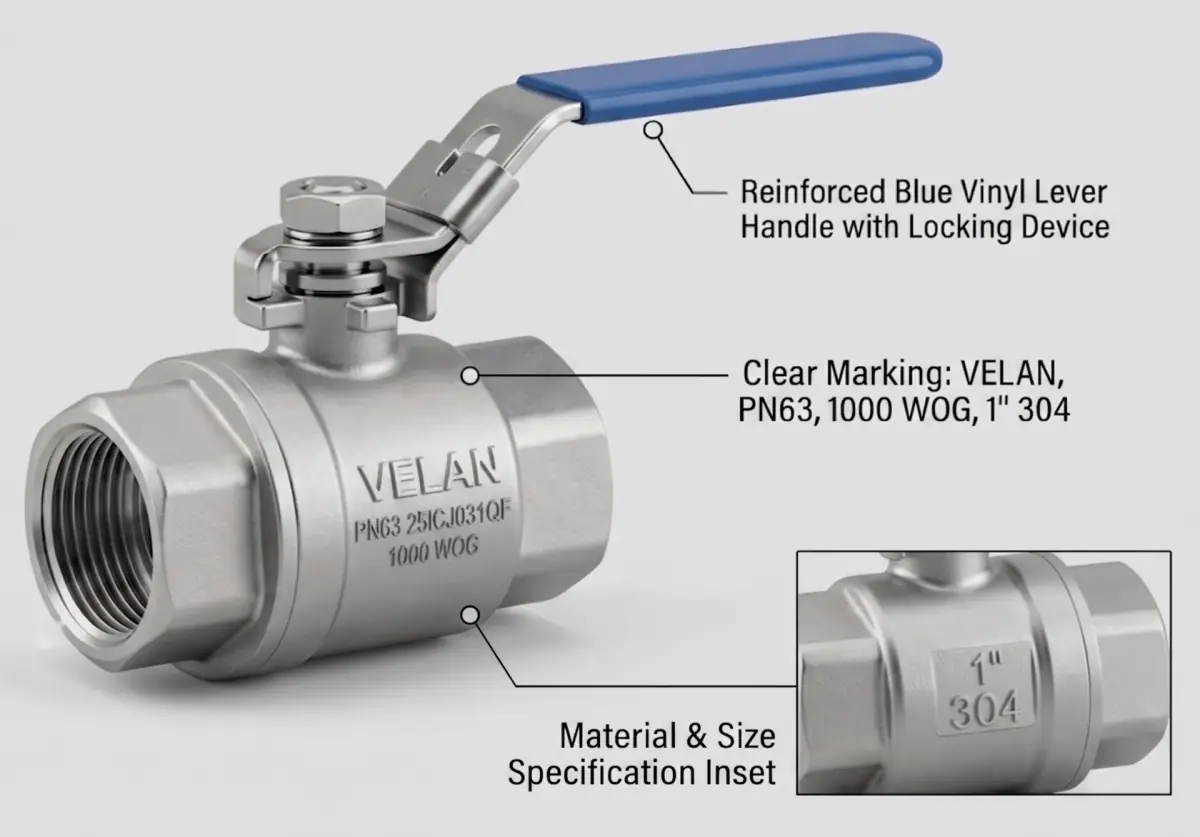
- VELAN is the brand. Order the same brand again and you get the same valve.
- PN63 is the metric nominal pressure rating: 63 bar.
- 1000 WOG means a working pressure of 1000 psi (about 69 bar) for water, oil or gas at ambient temperature, without shock.
- 25ICJ031QF is the production code that traces the casting. Quote it with any query or claim.
- 1" 304, cast on the other side, gives the size and the body material.
Three things to check before you order
- Thread standard. BSP and NPT threads look similar but are not interchangeable. Match the thread of your pipe.
- Bore. A full-bore valve has the same bore as the pipe. A reduced-bore valve is one size smaller inside, which is fine for most services but adds some pressure drop.
- Service. Check the pressure, temperature and fluid against the valve's rating and seat material.
Using it well
Ball valves are made for fully open or fully closed service. Leaving one part-open to throttle flow wears the seats quickly. For regulating flow, use a globe valve instead.
We also stock VELAN stainless ball valves with Class 150 flanged ends.