When a flange is priced far below the market, there is usually a reason. Very often, the reason is thickness.
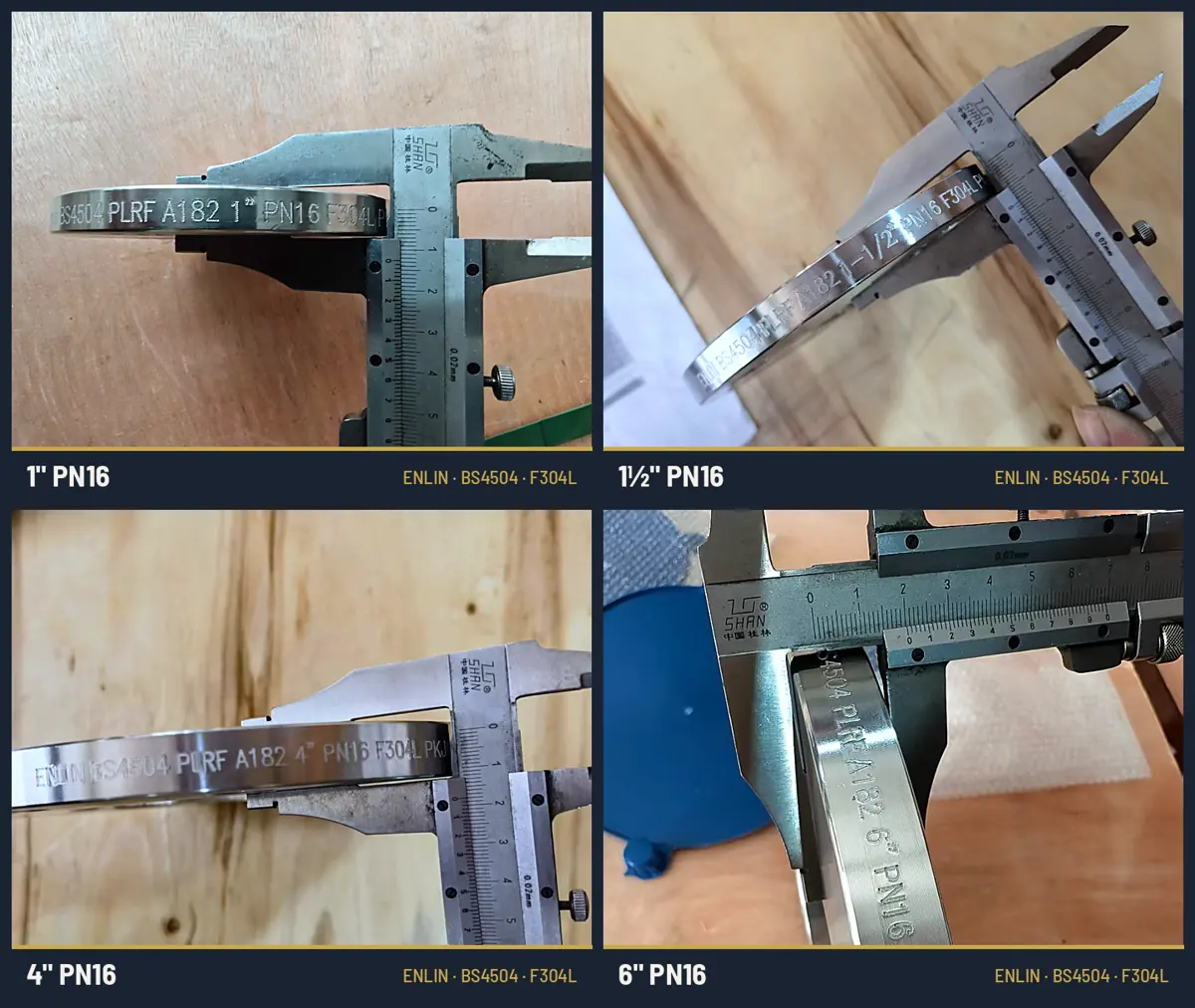
Why thickness matters
A flange's outside diameter, bolt circle and minimum thickness are set by its standard. Its pressure rating depends on meeting those dimensions. A flange machined thinner, or cut from thinner plate, can look identical on the shelf and carry the same marking, but it is no longer the product the marking describes.
A thin flange can:
- bend under bolt load, so the gasket is not compressed evenly and the joint weeps;
- fail a hydrotest, or pass it and leak later under temperature cycling;
- fall short of the pressure rating marked on its rim.
The saving to the seller is real, because less steel means a lower cost. The cost to the buyer arrives later, on site.
Three quick checks
- Measure the thickness with a vernier calliper or thickness gauge and compare it with the standard's table. For a raised-face flange, note whether the table includes the raised face or not.
- Check the outside diameter and bolt circle against the same table. Short dimensions are another sign of a flange cut from undersize material.
- Weigh it against a known good piece of the same size, class and type. A noticeably lighter flange needs explaining.
Our flange dimension tables give the reference figures for ASME B16.5 Class 150 and 300, and for PN16 and PN40.
Two questions to ask your supplier
- What is the thickness?
- To which standard?
A supplier who knows his stock will answer both at once. A marked flange with a heat number and a certificate gives you something to check those answers against.
How we handle it at Al Juyushi
Material goes through measurement and visual inspection on arrival, before it goes into store.